

Indigenous peoples today make up 15% of the most marginalized people on the planet. For decades they have been demanding recognition of their identity, way of life, and natural resources, but despite their efforts they continue to be victims of discrimination and injustice.A survey carried out by the Primate Expertise (PEx) organization last April (2018) in 4 pygmy villages bordering PNKB showed that 4.1% of indigenous Pygmies are professionals against 95.9% Bantu.PEx is setting up a project entitled « Establishing solidarity groups of vulnerable pygmy women bordering Kahuzi-Biega National Park to improve their Livelihood « . This project is carried out by the practice of agriculture by pygmy women living around Kahuzi-Biega Park in eastern DRC.
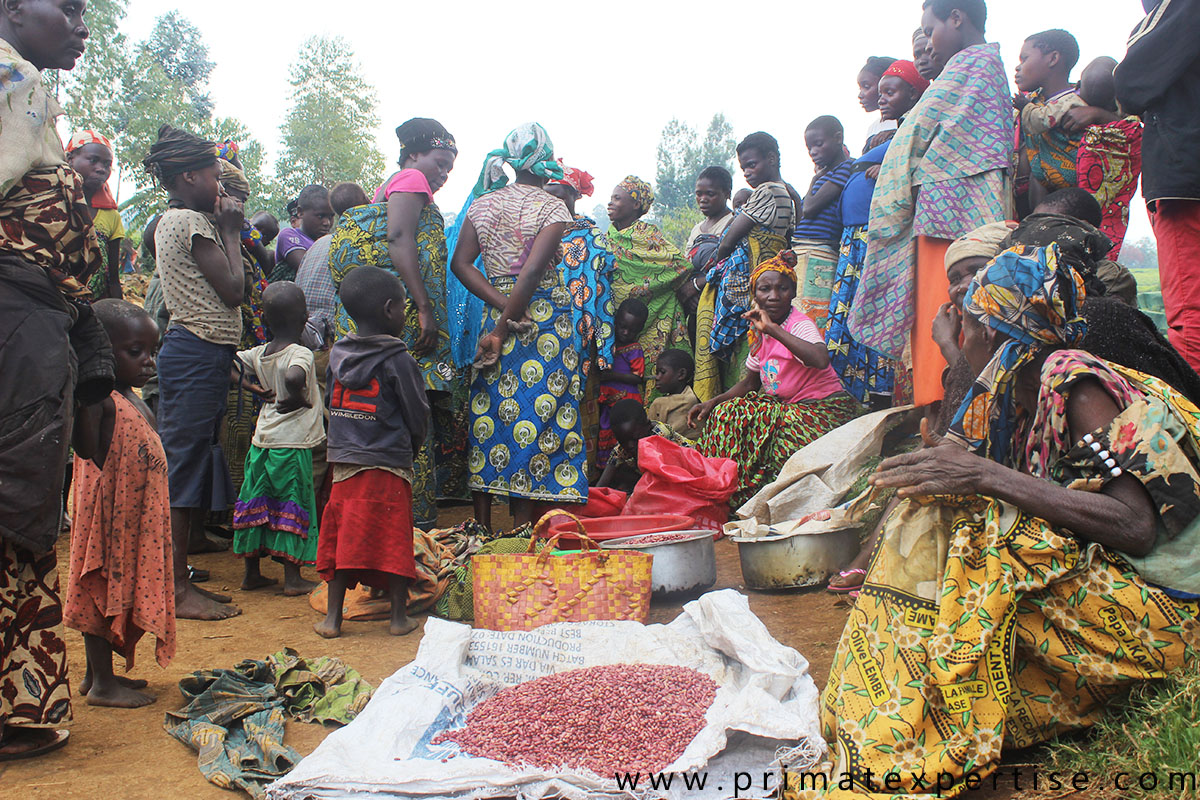
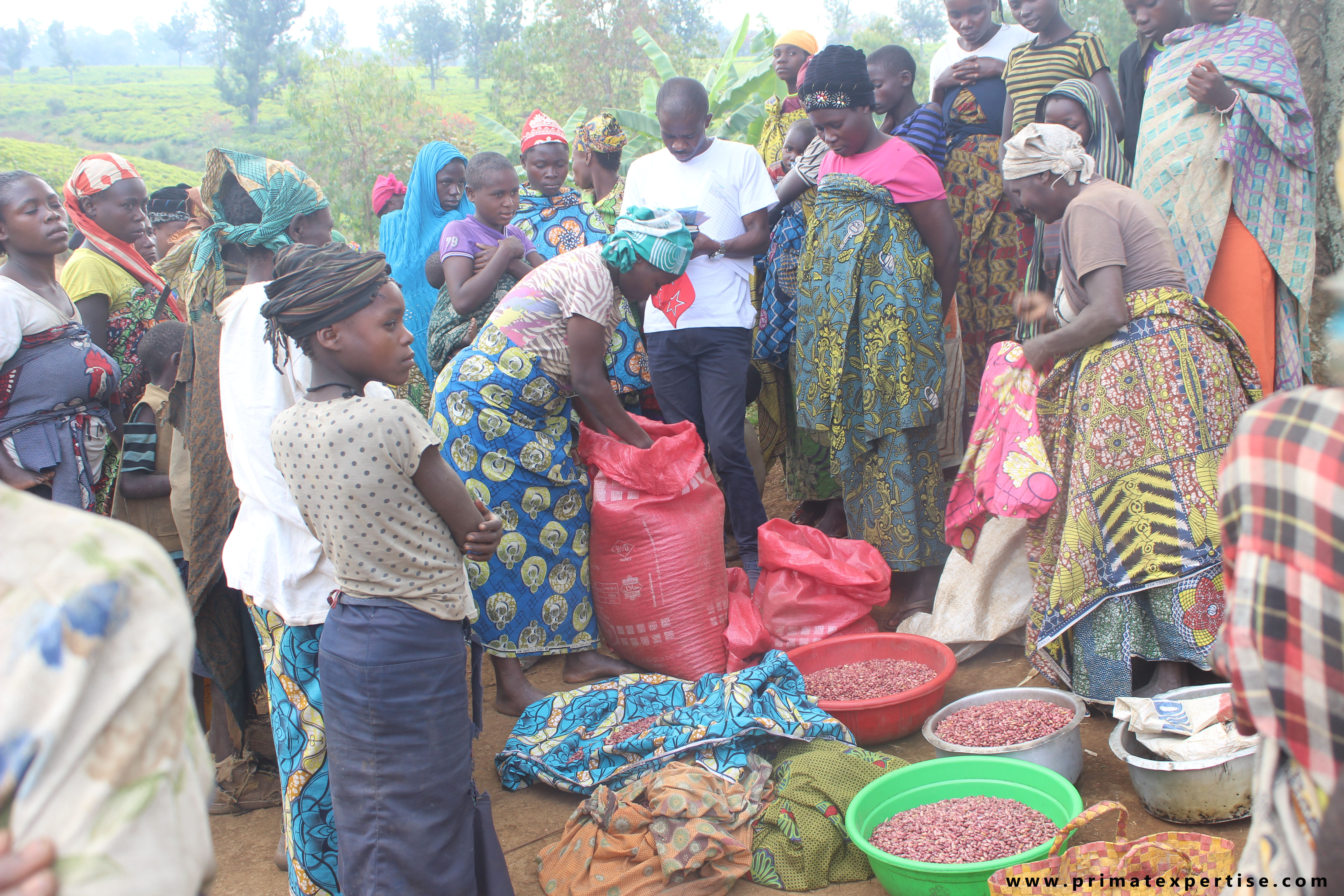
Delivery of bean seeds to Pygmy women from Chahoboka-Katana village and distribution to Buyungule beneficiaries.
Specific measures should be implemented to protect the fundamental rights of indigenous Pygmy peoples, especially those living around PNKB. Official recognition and the implementation of appropriate measures remain major issues at the local level to promote an harmony life between the conservation of PNKB primates and the pygmy riparian communities through the active involvement of women.
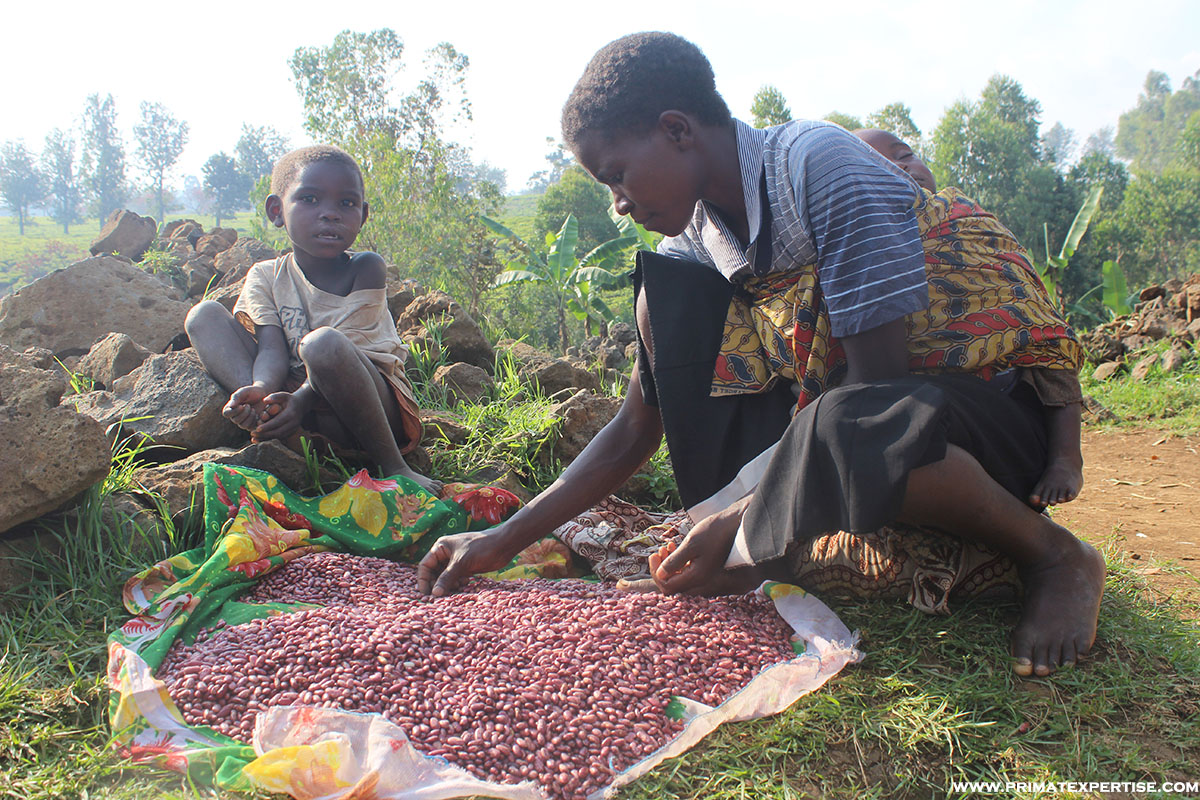
Sorting the seed before sowing by the Pygmy woman Mwamini M’Nakulire inhabitant of Buyungule.
To do this PEx initiates in the first place in two pygmy villages (Buyungule and Chahoboka) two villages for the first pilot year and secondly to cover three villages: Cibuga, Tshibati and Muyange for the second year. All these 5 villages are around the PNKB. This food crop project aims to improve the living conditions of Pygmy women to take an active interest in agricultural activities at the expense of firewood research and sales within the Park. These rural activities are practiced in the concession of INERA / MULUNGU which had given them plots of land to be cultivated in a rental capacity around PNKB so that they never come again to steal the products of this state institution. This measure was not adequate because given their lives of under-indigence, until now they continue to lack the inputs to use to sow their rental fields.
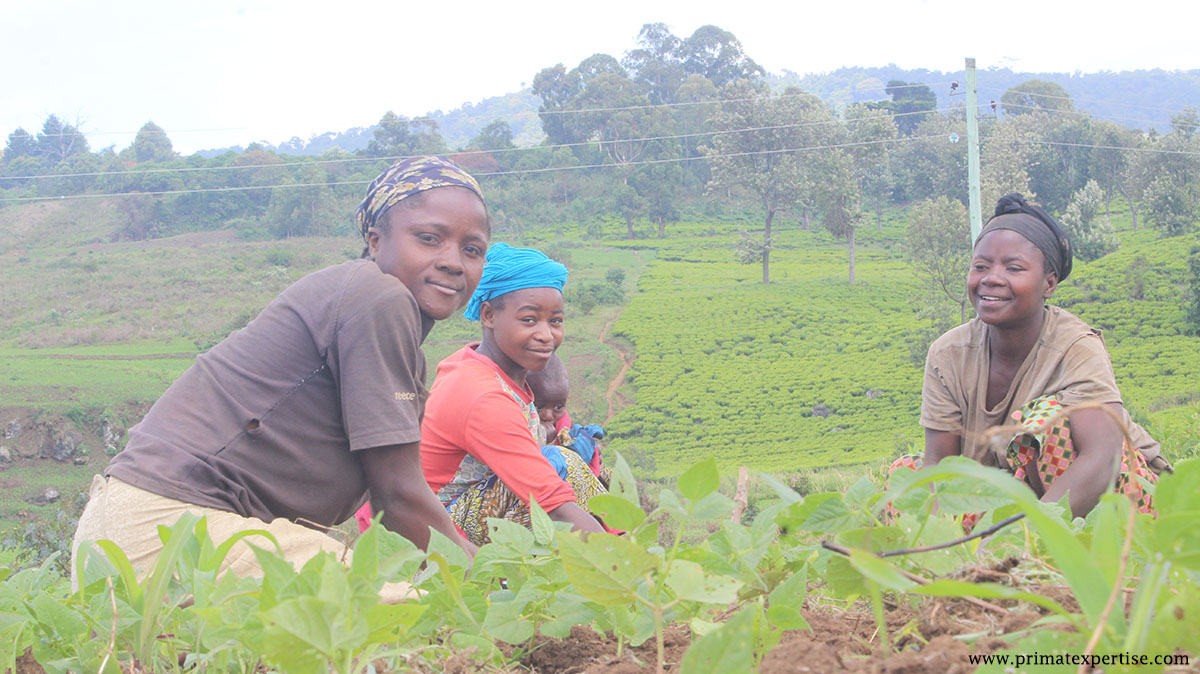
Pygmy women working in solidarity group weeding in the rental fields of INERA private concession.
PEx embarked on the first step in the implementation of the project despite its very limited means. The aim is to provide a forum for reflection, consultation and work by 150 Pygmy indigenous women, whose bravery would reduce the anthropogenic pressures in Kahuzi-Biega Park. This project will serve at least 900 household members in 5 villages through the provision of agricultural inputs and agricultural tools. As part of the promotion of conservation, a request is made to the various donors to try to support the survival of the pygmy woman and to promote the empowerment of the indigenous Pygmy woman living in a vulnerable situation around protected areas.
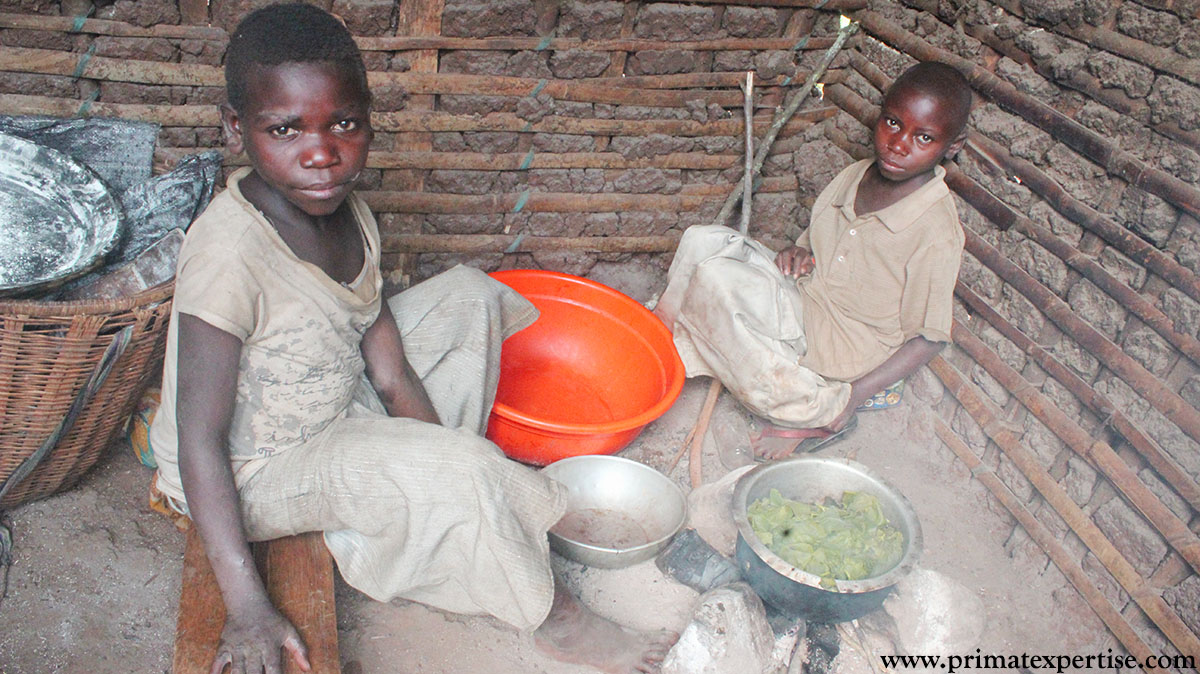
Lobe and Bibiche in their house preparing bean vegetables from the effects of the project in Buyungule.